"I decide who I spend time with, Mark. You don’t get a say in my life anymore."
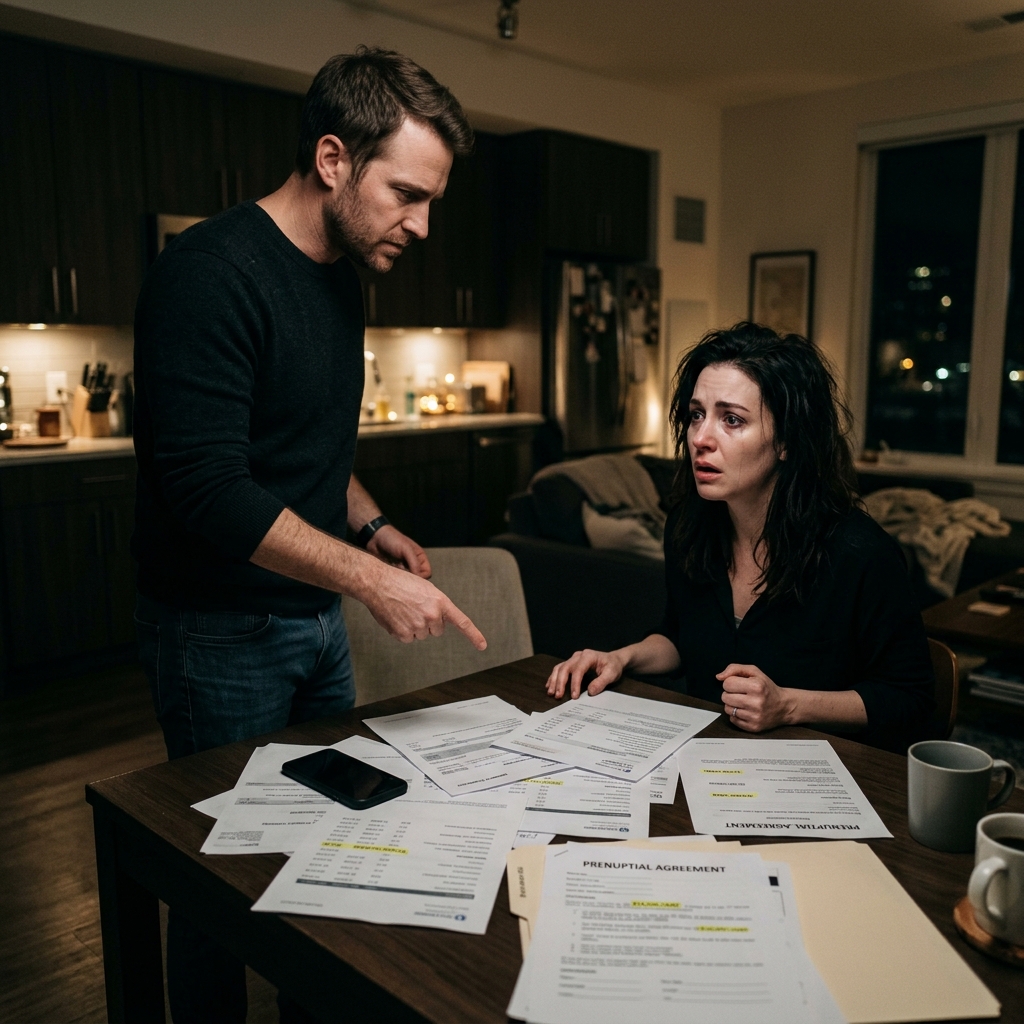
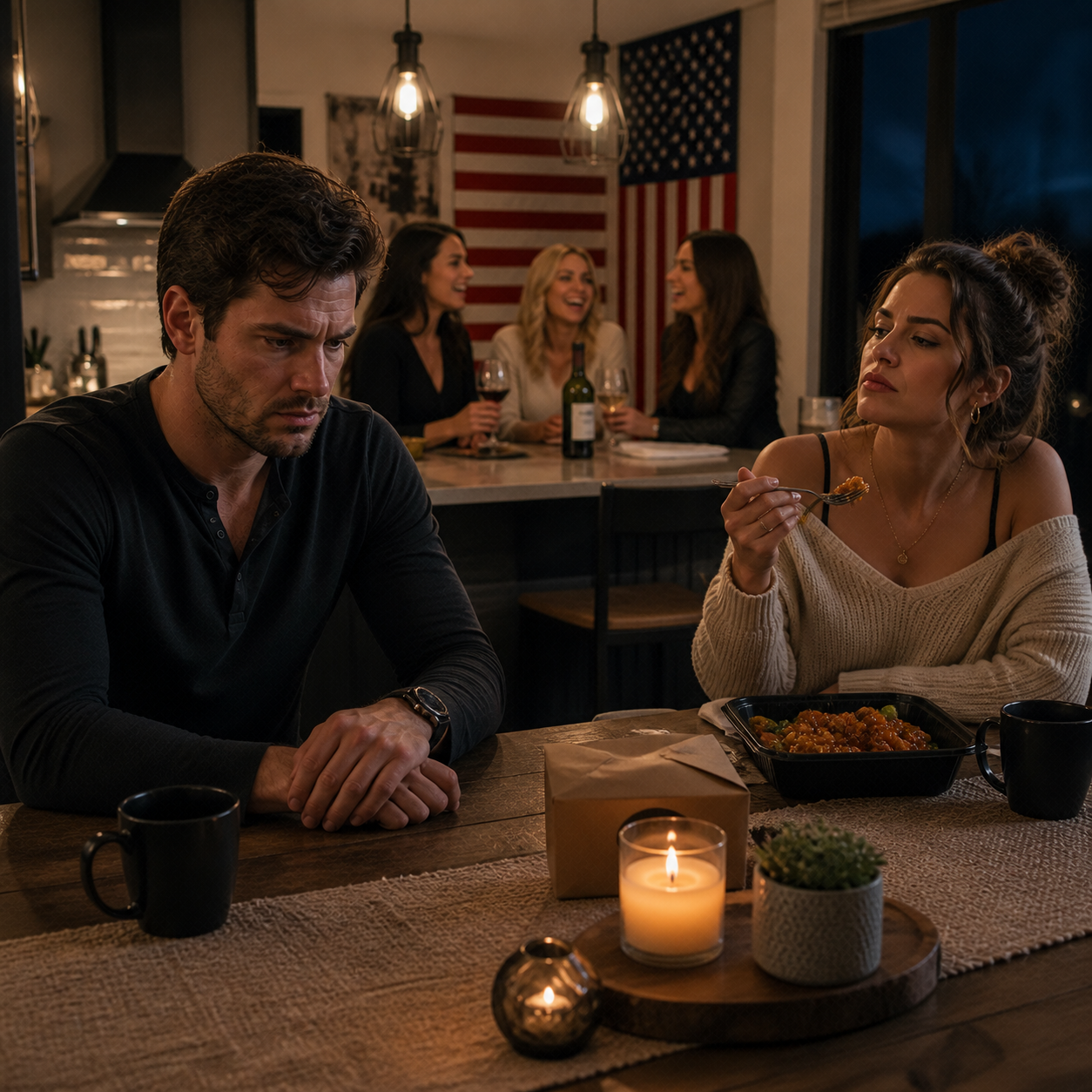
Those were the words that officially killed my marriage. They weren’t screamed during a plate-smashing argument. They weren’t whispered in a moment of passion. They were delivered across our kitchen table, cold and rehearsed, while the smell of takeout sesame chicken filled the air. Elena didn’t even look up from her plate. She just kept eating, her fork clicking against the ceramic like a ticking clock counting down the seconds of our seven-year history.
I remember looking at her—really looking at her—and realizing I didn’t know the woman sitting three feet away from me. This wasn’t the Elena who used to steal my hoodies and laugh until she couldn't breathe. This was a hollowed-out version, a mannequin dressed in expensive new clothes, speaking in a language that sounded like it had been downloaded from a "self-help" cult.
"Your choice," I said. Just two words.
She paused then, her fork hovering in mid-air. I think she expected a fight. She wanted me to beg, to plead, to give her more ammunition for her next "meeting" about how controlling and oppressive I was. But I didn't give her the satisfaction. I just set my napkin down, stood up, and walked out of the room.
To understand how we got to that cold chicken and those colder words, you have to understand the "Empowerment Circle."
Elena had always been a social butterfly, which I loved about her. But four months ago, she met Cassandra. Cassandra was thirty-five, twice-divorced, and ran a "life-coaching" business that mostly seemed to involve convincing married women that their husbands were the only thing standing between them and greatness. She was the sun, and Elena had become a planet caught in her gravitational pull.
It started with a "book club." Once a month. Then it became a "wellness seminar" twice a week. Soon, Elena was coming home at 1:00 AM, smelling of expensive gin and a perfume I didn’t recognize, talking about "boundary setting" and "toxic masculine patterns."
"Mark, we need to talk about space," she told me one Tuesday night as she paced our bedroom.
"Space? Elena, I haven't seen you for dinner in three days. I’m just asking if you’re coming home tonight so I know whether to lock the deadbolt."
She turned on me, her eyes flashing with a rehearsed kind of anger. "See? That’s it! The deadbolt. It’s a metaphor for how you try to cage me. Cassandra says that men use 'safety' as a tool for domestic incarceration. I am a sovereign being, Mark. I don't need a warden."
I was stunned. "A warden? I’m your husband. I’m the guy who spent all last Saturday fixing your car so you’d be safe on the highway. How is that incarceration?"
"You did that to make me dependent on your mechanical skills," she snapped. "It’s a subtle form of undermining my autonomy."
It was like arguing with a chatbot programmed by someone who hated men. Every logical point I made was deflected with a buzzword. If I said I missed her, I was "emotionally needy." If I asked who she was with, I was "patrolling her social circle."
The group had two other core members: Megan and Chloe. Megan had left her husband because he "suffocated her dreams" by suggesting she get a part-time job when their savings hit zero. Chloe was on her fourth "soulmate" of the year, blaming every previous man for "fearing her light." Together with Cassandra, they formed a vacuum of accountability.
I met them all once at a dinner Elena insisted I attend. It was an ambush.
"So, Mark," Cassandra said, leaning across the table, her jewelry clinking. "Elena tells us you work in corporate finance. How does it feel to be a cog in the patriarchal machine that keeps women financially subservient?"
I took a slow sip of my water. "I think of it more as 'paying the mortgage on the house Elena lives in,' but sure, 'cog' works too."
The table went silent. Megan scoffed. Chloe rolled her eyes. Elena looked at me with pure contempt, as if I had just insulted her deity. For the rest of the night, I was invisible. They talked over me, around me, and about me as if I were a difficult toddler.
"Women need to stop dimming their brilliance for men who can't handle the glare," Cassandra announced, raising her glass. Elena cheered, her face glowing with a frantic, artificial energy.
That night, back at home, the mask slipped even further. Elena stopped texting me during the day. She stopped asking how my work was going. She stopped using the "we" language that had been the foundation of our life. It was "my" time, "my" money, "my" needs.
I started noticing the changes in her appearance, too. Not that she looked bad—she looked incredible—nhưng nó không dành cho tôi. She bought a whole new wardrobe of low-cut tops, short skirts, and lace lingerie that I never saw her wear in our bedroom. She’d spend two hours on her makeup just to go to a "meditation circle" at a downtown bar.
One night, I found a receipt for a place called The Velvet Lounge. It was a high-end cocktail bar known for its "no-photos" policy and "intimate" booths. The bill was for four drinks—two martinis and two shots of expensive tequila. The timestamp was 11:45 PM on a Wednesday.
When I confronted her, she didn't even flinch. "I was networking, Mark. Not everything is a conspiracy. Your insecurity is really starting to become a burden on my personal growth."
"Insecurity? Elena, you told me you were at Megan's watching a documentary on female entrepreneurs. Megan doesn't drink tequila."
"Maybe she started," Elena said, her voice like ice. "Or maybe I don't have to account for every drop of liquid that passes my lips. This is exactly what Cassandra warned me about. The interrogation. The cage."
I realized then that I wasn't just losing my wife; I was being framed as the villain in a story she was writing for her friends. Every question I asked was a "violation." Every attempt to connect was "manipulation."
She started staying out later and later. The "meetings" became weekend retreats. She’d come home on Sunday afternoons, looking exhausted but triumphant, as if she’d just survived a war. And in her mind, she had. She was at war with our marriage, and she was winning.
But here is the thing about people like Cassandra: they teach you how to burn bridges, but they don't teach you how to swim once the bridge is gone.
Two weeks before that final dinner at the kitchen table, I decided to stop being a passive observer of my own destruction. I started paying attention. Really paying attention. I noticed the way she’d tilt her phone away from me. I noticed the way she’d leave her wedding ring in the jewelry dish "because it interfered with her energy flow."
And then, I saw the post.
It was a small slip-up. Chloe, the impulsive one of the group, had posted an Instagram story at a nightclub downtown. In the background, for just three seconds, you could see a woman who looked exactly like Elena. She was laughing, her head thrown back, and a man’s hand was resting firmly on the small of her back. She wasn't wearing her ring. She wasn't "meditating."
I screenshotted it. Then I did something I never thought I’d do. I hired a private investigator. Not because I wanted to save the marriage—at that point, the Elena I loved was already dead—but because I needed to know the truth before the "Empowerment Circle" convinced the world I was the monster.
The investigator, a guy named Miller, called me four days later.
"Mark? You might want to sit down," he said. "Your wife isn't at a 'wellness retreat' this weekend. She’s at a boutique hotel in the city. And she’s not alone."
My heart didn't break. It turned to stone. I asked him to send the photos. When they arrived in my inbox, I looked at them with a detached, clinical curiosity. There she was. My wife. The woman I’d supported through her master’s degree, the woman I’d held while she cried after her father died. She was walking into a hotel lobby with a man who looked like he spent more on his hair gel than I did on my car.
I didn't call her. I didn't text. I spent that entire weekend moving my essential documents to a safe deposit box. I talked to a lawyer. I moved half of our joint savings—exactly 50%, not a penny more—into a private account.
And then, I waited. I waited for her to come home and lie to my face one last time.
Which brings us back to the kitchen table. To the cold sesame chicken. To her telling me I didn't get a say in her life.
"Your choice," I repeated, standing up.
She looked at me, a smirk playing on her lips. "I'm glad you're finally starting to respect my boundaries, Mark. It shows real growth."
"Oh, I respect them more than you know, Elena," I said, walking toward the hallway. "In fact, I respect them so much that I've decided to give you all the space in the world. Permanent space."
She frowned, her fork finally dropping. "What is that supposed to mean?"
I turned back to her, my hand on the doorframe. "It means you’re right. I don't get a say in your life. And since I don't get a say, I've decided I don't want a part in it either."
I walked into the guest bedroom and locked the door. My phone buzzed in my pocket. It was a text from Miller, the PI. He had one more update.
"Mark, there's something else you need to see. This goes deeper than just an affair. Your wife and her friends... they aren't just talking about empowerment. They're planning something that’s going to hit you where it hurts the most."
I stared at the screen, the silence of the house suddenly feeling very heavy. Elena was knocking on the door now, her voice shifting from cold to annoyed, demanding to know what I meant. But I wasn't listening to her anymore. I was looking at the new photos Miller had just sent, and I realized that the "Empowerment Circle" was about to become a wrecking ball, and they were aiming directly at my career.
But they forgot one thing: I’m a finance guy. I keep receipts. And I was about to show them exactly what happens when you try to bankrupt a man who has nothing left to lose.
![[FULL STORY] The morning I was supposed to propose to the woman I loved, I found out I was just her temporary safe harbor while she auditioned her ex-boyfriend for my job](https://social-media.rabedo.com/thumbnails/1777880310_R5.jpg)
![[FULL STORY] My Fiancée Said Her Family Didn’t Think I Was Good Enough. I Thanked Them for Saving Me From Five Years of the Wrong Marriage.](https://social-media.rabedo.com/thumbnails/1776936317_17.png)
![[FULL STORY] My Fiancée's Mom Handed Me A $10,000 Bill For Raising Her My Fiancée Said](https://social-media.rabedo.com/thumbnails/1777879806_23-.jpg)