
![[FULL STORY] He Built a Perfect Life on Lies… So I Let Him Destroy It Himself](https://social.greatgames.info/storage/thumbnails/1777661263_24ea954a-b099-4ca0-a69b-4d0eddb95264.png)
I knew exactly what was going to happen thirty seconds before it did, and that was the moment I realized I wasn’t nervous anymore. I was calm, not the fragile kind of calm that cracks under pressure, but the kind that settles deep inside you when the decision has already been made and there’s no turning back. The room was full, too full, filled with laughter, clinking glasses, and the soft hum of people performing success for one another. And at the center of it all stood Nathan, smiling like a man who believed he owned every piece of the life he had built. He raised his glass, preparing to speak, completely unaware that the version of himself everyone admired was about to disappear.
Six months earlier, if you had asked me about Nathan, I would have described him exactly the way everyone else did. Reliable. Intelligent. Effortlessly composed. He had a quiet charisma that made people trust him without question. He didn’t need to dominate a room because he understood how to control it without raising his voice. That was his strength. Not just in his career, but in every relationship he built. Including the one he built with me.
Our relationship didn’t begin with intensity or dramatic passion. It began with consistency, and at the time, that felt more valuable than anything else. Coffee at the same place every Saturday morning, conversations that stretched late into the night, small thoughtful gestures that made me feel seen. He remembered details most people would forget. He asked questions that made it seem like he genuinely wanted to understand me. But looking back now, I see the difference clearly. He wasn’t listening to connect with me. He was listening to map me. There’s a difference between understanding someone and learning how to manage them. I didn’t see it then. I see it now.
The first sign that something was wrong didn’t feel like a warning. It felt like a question I couldn’t quite answer. A shift in tone. A hesitation where there had never been one before. Nathan started responding to questions in a way that made sense on the surface, but never actually said anything real. Conversations felt slightly off, like trying to hold onto something that kept slipping just out of reach. If you’ve experienced it, you understand that feeling. It’s not obvious enough to accuse, but it’s too consistent to ignore. I told myself I was overthinking. That’s exactly what people like Nathan rely on. They rely on your willingness to doubt yourself before you ever consider doubting them.
The second sign came from a phone call he didn’t realize I overheard. He was in the other room, voice low and controlled, but there was something underneath it I had never heard before. Not fear. Nathan didn’t sound afraid. He sounded precise. Like someone handling something fragile that couldn’t be dropped. I didn’t hear everything, but I heard enough. Names that didn’t belong to his world. A location that meant nothing to me. And one sentence that stayed with me long after the call ended. “We can’t let this surface.”
When he walked back into the room, he was smiling again. Calm. Composed. Exactly who he always was. Or at least, exactly who he wanted me to believe he was. That was the moment everything shifted. That version of him wasn’t real. It was maintained.
I didn’t confront him. I didn’t ask questions. Because confrontation would have given him exactly what he was best at handling. Control. He would have explained, reframed, redirected. He would have turned uncertainty into doubt, and doubt into silence. I had seen glimpses of that before. I wasn’t going to give him that advantage.
So instead, I stopped reacting and started observing.
There’s a clarity that comes when you remove emotion from the equation. Patterns become visible. Details that once felt insignificant start connecting. Late meetings that didn’t align with his schedule. Sudden changes in routine that had no logical explanation. Conversations he guarded without appearing secretive. It was subtle. Carefully designed to avoid suspicion. But once you see the pattern, you can’t unsee it.
The truth didn’t arrive all at once. It never does. It came in fragments. A repeated name. A recurring location. Financial movements that didn’t match anything he had ever told me about his life. And eventually, something undeniable. Something that shifted everything from suspicion to certainty.
Nathan wasn’t just hiding something.
He was involved in something that, if exposed, wouldn’t just damage him.
It would erase everything he had built.
That’s the moment most people act. That’s where anger takes over. But anger is loud. And loud things are easy to control.
Silence isn’t.
So I stayed silent.
I documented everything. Every message. Every transaction. Every inconsistency. But more importantly, I studied how he hid it. Because exposing the truth isn’t enough. If you want to dismantle someone like Nathan, you don’t just reveal what they did. You reveal how they protected it.
His entire life was built on perception. On timing. On control.
So I chose to take all three away from him.
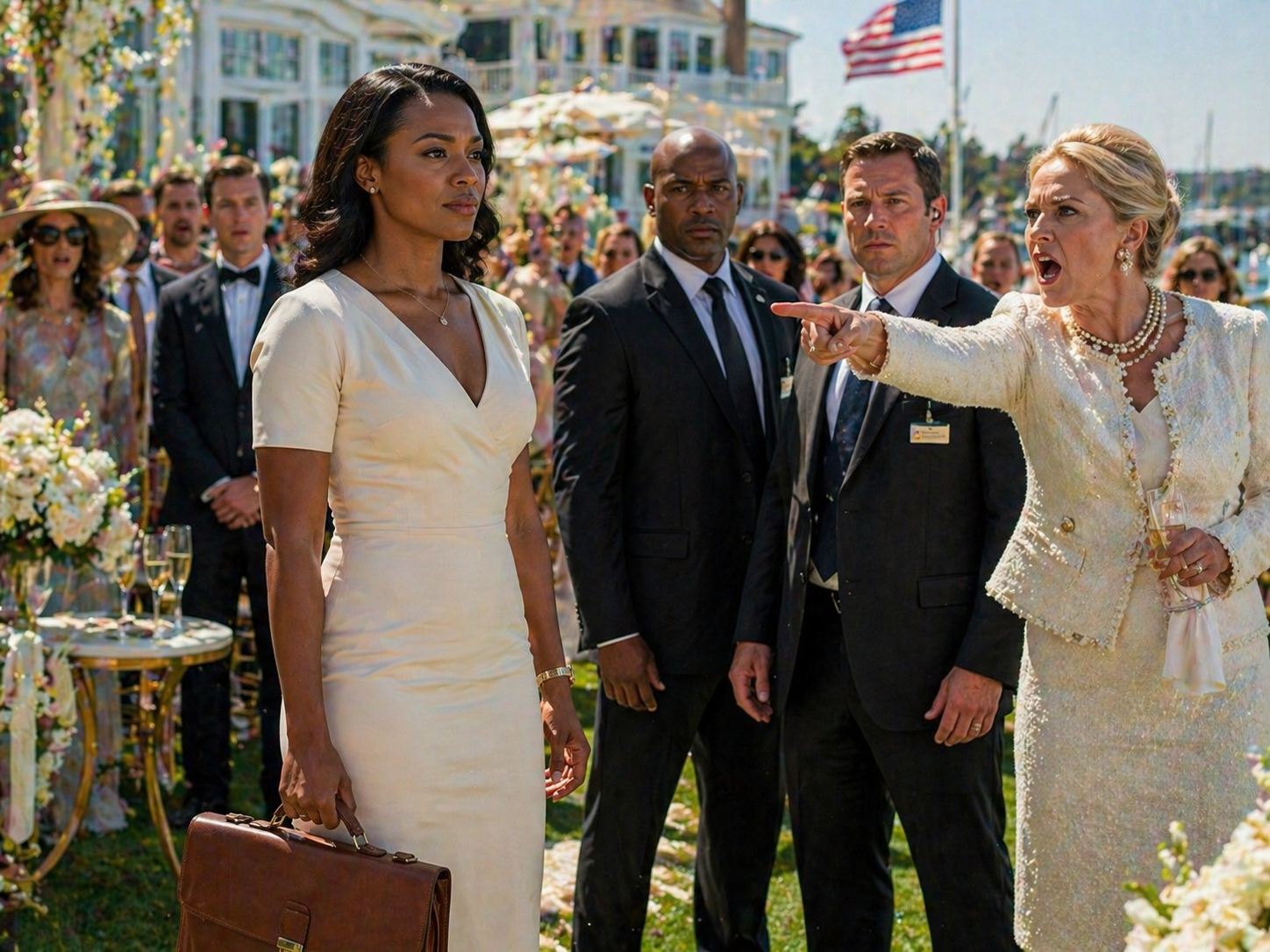
The opportunity came at the perfect moment. His company’s annual event. A room filled with people who admired him. Trusted him. Believed in him. It wasn’t just a celebration. It was a stage. A place where his reputation wasn’t questioned, only reinforced.
And Nathan was the main speaker.
Of course he was.
That night, everything was exactly how he wanted it. Perfect lighting. Perfect energy. Perfect audience. People were listening before he even spoke, ready to believe whatever he said.
And that was the point.
Because the higher someone stands, the harder they fall when the ground disappears beneath them.
He began his speech the way he always did. Calm. Measured. Talking about growth, integrity, trust. The irony was almost unbearable. Every word strengthened the illusion he had spent years building.
I waited.
Timing matters.
If you interrupt too early, people don’t understand what they’re losing. If you wait too long, the moment loses its weight.
So I waited until the room was fully with him. Until every person there believed in him completely.
And then I stood up.
At first, no one noticed. Quiet actions rarely demand attention immediately. But when they do, they shift everything.
I didn’t raise my voice.
I didn’t create a scene.
I simply said his name.
“Nathan.”
He stopped mid-sentence.
The room turned.
And for the first time since I had known him, I saw something real in his expression.
Not fear.
Recognition.
Because in that moment, he understood.
Not what I was about to say.
But what I already knew.
What followed wasn’t chaos. It was precision. I didn’t accuse him with emotion. I presented facts. Structured. Clear. Impossible to reinterpret. And more importantly, I revealed them in a sequence that dismantled his narrative piece by piece.
The room didn’t erupt.
It went silent.
Because truth, when delivered without noise, forces people to listen.
You could see it happening.
Confusion.
Denial.
Realization.
Nathan tried to respond. That was instinct. He tried to regain control, to reshape the narrative. But there was nothing left to reshape.
Because I didn’t just reveal the truth.
I revealed the system he used to hide it.
And once people understand the mechanism behind the illusion, it’s impossible to believe it again.
The silence that followed was heavy, but not empty. It was filled with everything people were trying to process at once.
And in that silence, Nathan stood there.
Not as the man everyone admired.
Just a man who had finally been seen clearly.
I didn’t stay to watch the aftermath.
I didn’t need to.
Because the moment had already done its job.
But the story didn’t end there.
The next morning, everything began to unfold exactly the way I expected. The people who once defended him started asking questions. His company opened an internal investigation. Partnerships froze. Conversations shifted. The same control he had relied on disappeared overnight.
Within two weeks, he stepped down.
Within a month, the truth reached places he could no longer contain.
And eventually, everything he built began to collapse under the weight of reality.
I never contacted him again.
I never needed closure.
Because closure doesn’t come from hearing someone explain themselves.
It comes from no longer needing them to.
Months later, I returned to that same venue for a different event. The room felt the same, but I didn’t. I stood there, watching people laugh, talk, perform their versions of success, and I realized something simple.
The truth doesn’t just expose others.
It frees you.
It frees you from pretending not to see.
It frees you from carrying something that was never yours to carry.
And sometimes, the most powerful thing you can do isn’t to fight.
It’s to wait.
To understand.
And to choose the exact moment when the truth no longer needs your voice to be heard.
![[FULL STORY] My Fiancée Wrongly Accused Me to Have Me Locked Up She Smirked, "Enjoy Your Time Behind Bars](https://social.greatgames.info/storage/thumbnails/1777304307_S4.png)
![[FULL STORY] She Sent One Text That Ended My Engagement — And Revealed Everything I Needed to Know](https://social.greatgames.info/storage/thumbnails/1776883065_47f8b8ca-227b-4f71-b080-ad857ed96747.png)
![[FULL STORY] My Wife Thought I Was Just A Simple Mechanic, But She Didn't Know I Had Been Recording Her "Neighborhood Rotation" Plan For Months.](https://social.greatgames.info/storage/thumbnails/1776853265_17.png)

![[FULL STORY] I Hid in the Closet to Surprise My Husband—What I Heard Changed Everything](https://social.greatgames.info/storage/thumbnails/1776746898_D67.jpeg)